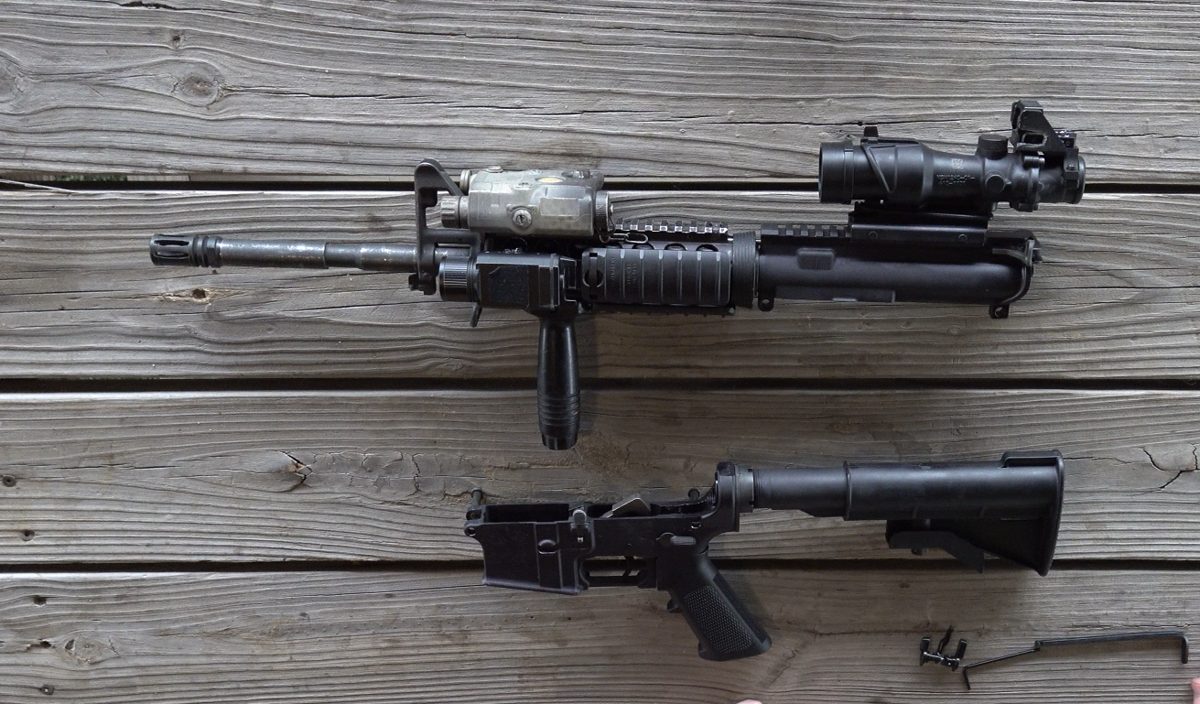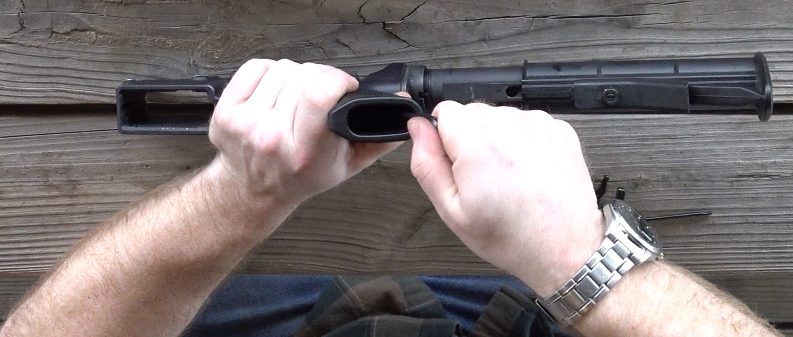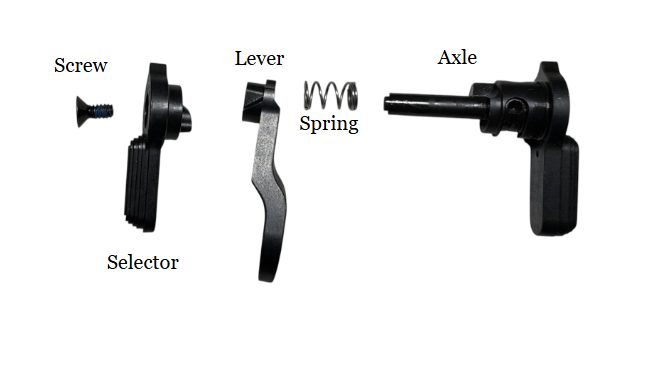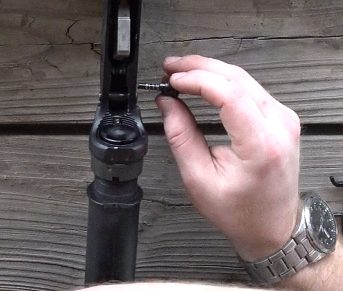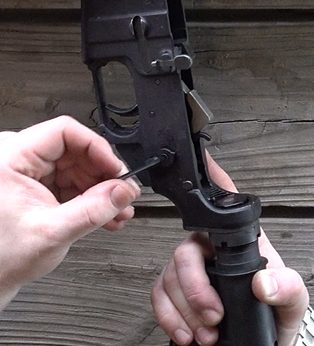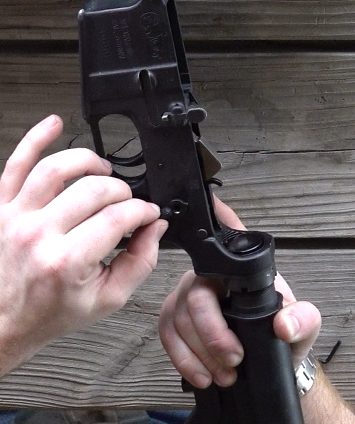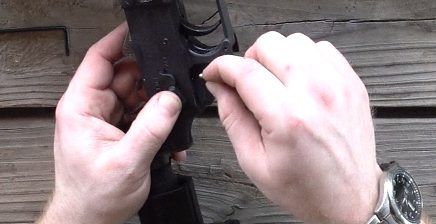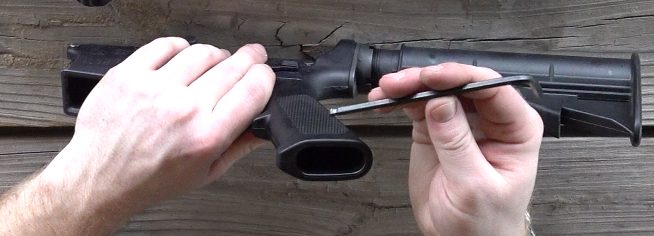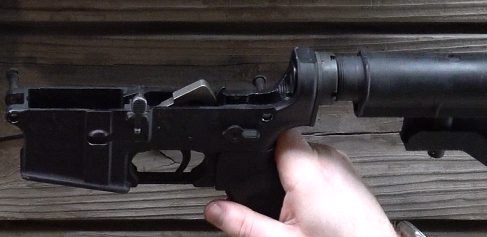
MARC INSTALLATION & TUNING
PLEASE BE AWARE THE MARC SCREW IS RECOMMENDED TO BE INSTALLED WITH 15 IN LBs BLUE LOCTITE IS PRE-APPLIED ON THE THREADS, AND MORE LOCTITE IS NOT NEEDED ON THE FIRST INSTALL.


Tuning
Getting the MARC installed is the easy half. The gun still has to be tuned around it. An active reset device asks the carrier to do more work on the way home than a normal AR does, so a buffer that was fine before can leave you with a dead trigger or light primer strikes once the MARC is in. Both symptoms trace back to the same thing: the bolt bouncing off the barrel extension instead of settling. Add buffer weight before you change anything else.
These numbers come off our own test guns, with consolidated community reports filling in the rest. Your build may want something different.
Reading the chart
Buffer key, lightest to heaviest: Carbine, H1, H2, H3, A5H4. Where two weights are listed, start with the heavier one and work down until the gun stops running, then go back up a step.
The Carbine Tube and A5 Tube columns are alternatives, not a stack. Pick the column that matches the receiver extension already on your rifle. A5 gives you a longer travel and a softer impulse, which is why its recommended weights often sit a step lighter than the carbine equivalent.
A dagger marks a starting point we reasoned out rather than tested. Expect to tune those. Start heavy and work down.
A warning triangle marks a build that fights back. Those are listed out under Flagged builds below.
5.56 NATO
Gas length does more here than barrel length. A carbine-gas 16 inch barrel has the longest dwell and the highest port pressure of anything on this list, and it unlocks hard enough to outrun the reset. Mid-length at the same barrel length is a much easier gun to tune.
| Barrel Length | Gas System | Suppressed | Carbine Tube | A5 Tube |
|---|---|---|---|---|
| 20" | Rifle | No | Carbine / H1 | A5H0 / A5H1 |
| † 20" | Rifle | Yes | H1 / H2 | A5H1 |
| 18" | Rifle | No | Carbine / H2 | A5H0 / A5H1 |
| 16" | Mid | No | H1 / H2 | A5H1 |
| 16" | Mid | Yes | H2 / H3 | A5H2 |
| ⚠ 16" | Carbine | No | H2 / H3, or rifle spring with a carbine buffer | A5H2 |
| ⚠ 16" | Carbine | Yes | H3 or heavier, with an adjustable gas block | A5H3 / A5H4 |
| 14.5" | Mid | No | H2 / H3 | A5H2 |
| ⚠ 14.5" | Carbine | Yes | H3, adjustable gas block required | A5H3 / A5H4 |
| † 13.7" | Mid | Either | H2 | A5H2 |
| 12.5" | Carbine | No | H2 / H3 | A5H2 / A5H3 |
| 12.5" | Mid | Yes | H2 | A5H2 |
| 11.5" | Carbine | No | H1 / H2 | A5H2 |
| 11.5" | Carbine | Yes | H2 / H3 | A5H3 |
| 10.5" | Carbine | No | H2 / H3 | A5H1 / A5H2 |
| 10.5" | Carbine | Yes | H3 | A5H3 |
| † 8" and under | Pistol | Either | H2 / H3 | A5H1 / A5H2 |
300 BLK
Subsonic and supersonic are close to two different cartridges as far as the gas system is concerned. A port sized to cycle subsonic ammo is badly over-gassed on supersonic, and a port sized for supersonic will not move the carrier far enough on subsonic. Pick which one the gun is for, or budget for an adjustable gas block.
| Barrel Length | Ammo | Gas System | Suppressed | Carbine Tube |
|---|---|---|---|---|
| ⚠ 16" | Subsonic | Carbine | Either | No reliable answer |
| 10.5" | Subsonic | Pistol | Yes | H2 |
| 8" to 9" | Subsonic | Pistol | Yes | H1 / H2 |
| 7.5" | Subsonic | Pistol | Yes | H1 / H2 |
| † 6.25" and under | Subsonic | Pistol | Yes | Carbine / H1 |
| † 5.5" | Subsonic | Pistol | Yes | Carbine / H1 |
| 7.5" | Supersonic | Pistol | No | H1 |
| ⚠ 7.5" to 10.5" | Supersonic | Pistol, ported for subsonic | Either | H3 |
7.62x39
Factory gas ports on this cartridge vary more than on any other AR chambering, so measure yours before you buy a buffer. On 7.62x39 the bolt wears out before the buffer does.
| Barrel Length | Gas System | Suppressed | Carbine Tube | A5 Tube |
|---|---|---|---|---|
| 16" | Carbine | No | H2 / H3 | A5H1 / A5H2 |
| † 12.5" | Carbine / Mid | No | H2 / H3 | A5H1 |
| ⚠ 10.5" and under | Carbine | No | Measure your port first | See the flagged builds note |
| † 8.5" | Pistol | No | H2 | A5H1 |
6mm ARC
6 ARC runs at a higher chamber pressure than 5.56 but through a slower, heavier bullet, so it lands in a narrow band. H2 covers most of it.
| Barrel Length | Gas System | Suppressed | Carbine Tube | A5 Tube |
|---|---|---|---|---|
| 18" | Rifle | No | H2 | A5H2 |
| 16" | Mid | Either | H2 / H3 | A5H2 |
| † 12.5" | Carbine | Either | H2 / H3 | A5H2 |
Flagged builds
5.56, 16", carbine gas. Long dwell and high port pressure, so a violent unlock and a fast carrier. The hardest common build to get a clean reset from. An adjustable gas block buys you the most.
5.56, 16", carbine gas, suppressed. Everything above with back pressure stacked on top. Pick a different gas length if you have not bought the barrel yet.
5.56, 14.5", carbine gas, suppressed. More gas into the carrier than a fixed port can manage. Do not build this one without an adjustable gas block.
300 BLK, 16", carbine gas. Usually will not cycle subsonic at any buffer weight, with or without a can. Pistol gas is the right choice at this length.
300 BLK ported for subsonic, running supersonic. Over-gassed, and no single port size serves both. An adjustable gas block or adjustable carrier is a requirement here, not an upgrade.
7.62x39, 10.5" and under. Factory ports run anywhere from .070" to .125". One will not cycle at all, the other is badly over-gassed. Measure your port before you buy anything. On this cartridge the bolt is the wear item, not the buffer.
Buffer type matters as much as buffer weight
A buffer stamped H2 or H3 that is one solid piece of steel carries the mass but delivers no dead blow, and it will not stop bolt bounce. Shake the buffer before you install it. You should feel the weights slide inside.
9mm blowback
A blowback PCC cycles and recoils far more violently than a gas-operated AR. The bolt slams rearward under nothing but raw case pressure and spring, and everything downstream of it takes that impact directly. Run at least a 10 oz buffer, or the heaviest captured or hydraulic buffer that fits your tube.
Running any Copperhead FRD product, including the MARC, in an AR-9 with an unmodified bolt weight voids your warranty as gross negligence. Tune the gun first.
The bolt in a 9mm AR carries a separate rear weight, and on most carriers that weight sits in the space the lever needs to swing through. Notch it so the lever clears. Do not remove it altogether, because that weight is part of the mass the gun needs. Builders who skip this step report the bolt locking up, and levers bending and breaking.
Buffer length is a separate constraint from buffer weight, and it traps people both ways. A 9mm bolt needs about 3 inches of travel for the lever to reset. A carbine tube is 7 inches and a 9mm buffer is 4, which leaves exactly that. Stack a spacer into a carbine tube and you short-stroke the gun. Run a bare 9mm buffer in a longer A5 tube and you get roughly three quarters of an inch of overtravel that will eventually break the bolt catch. Use the A5 only if you are filling that space with spacer weight. Check yours by pulling the bolt fully to the rear by hand: the bolt face should stop about an eighth to a quarter inch behind the bolt catch.
Do not fit a 5.56 H2 or H3 in a 9mm gun. They are too short and far too light for a blowback action. Roller-delayed and radial-delayed uppers behave differently again, and none of the buffer mass guidance above carries across to them.
| Buffer weight | 10 oz minimum |
| Buffer length | About 4 in |
| Buffer tube | Carbine |
| Spring | Standard carbine |
| Bolt weight | Notched, not removed |
| Suppressed | Heaviest that fits |
Nobody publishes a tested buffer weight for a suppressed blowback PCC, so treat the suppressed row as a starting point and work up. Blowback9 on YouTube covers PCC tuning in more depth than we can fit here.
Trigger Compatibility
This list is not exhaustive, and it is not a guarantee. A trigger we left off may run fine, and one marked YES can still fight you in an odd build, since your lower, your buffer, and the trigger's own tolerance stack all move the result.
MODIFICATION REQUIRED means the trigger will physically fit but the lever does not clear it as shipped. Expect to remove a small amount of material from the trigger, which is work you cannot undo, so read the install guide before you put a file to it. NO means the geometry leaves nothing to work with.
| Brand | Model | Type | Compatible |
|---|---|---|---|
| Geissele | SSA | Two Stage | YES * |
| Geissele | SSA-E | Two Stage | YES * |
| Geissele | S3G | Single Stage | YES |
| Geissele | SD3G | Single Stage | YES |
| Geissele | G2S | Two Stage | YES * |
| Geissele | SD-E | Two Stage | YES * |
| Geissele | SSAEX | Two Stage | MODIFICATION REQUIRED |
| Geissele | SSAX | Two Stage | MODIFICATION REQUIRED |
| LaRue | MBT-2S (Flat & Curved) | Two Stage | MODIFICATION REQUIRED |
| CMMG | Milspec | Single Stage | NO |
| DPMS | Milspec | Single Stage | NO |
| Jacob Gray | Single Stage | Single Stage | YES |
| MimTac | MimTac Drastic | Single Stage | YES |
| Noveske | Single Stage | Single Stage | YES |
| PSA | EPT | Single Stage | YES |
| PSA | Custom SS Drop-In | Single Stage | YES |
| Rise Armament | Rave 140 | Single Stage | YES |
| Rise Armament | RA-434 | Single Stage | YES |
| Rise Armament | RA-535 | Single Stage | YES |
| Rise Armament | RA Blitz | Single Stage | YES |
| Rise Armament | RA LE145 | Single Stage | YES |
| Rise Armament | ICONIC | Two Stage | NO |
| Schmid Inside | Two-Stage | Two Stage | MODIFICATION REQUIRED |
| Schmid Inside | Pro Line | Single Stage | YES |
| Schmid Inside | GI Flat Face SS | Single Stage | YES |
| Schmid Inside | Match Flat Face SS | Single Stage | YES |
| Smith Defense | AR-15 LPK | Single Stage | YES |
| Sons of Liberty Gun Works | SOLGW LFT | Single Stage | YES |
| Spikes Tactical | ST Battle | Single Stage | YES |
| Timney | Competition 3LB | Single Stage | YES |
| Timney | Calvin Elite | Single Stage | YES |
| Heckler & Koch | HK MR556A1 | Single Stage | NO |
* Geissele two-stage triggers marked YES sometimes want a little polishing, or a small amount of material taken off the top of the trigger shoe tail, because the longer travel stacks up against the lever. The install guide walks through it.